By Emorhakpor Ogheneovo Timothy
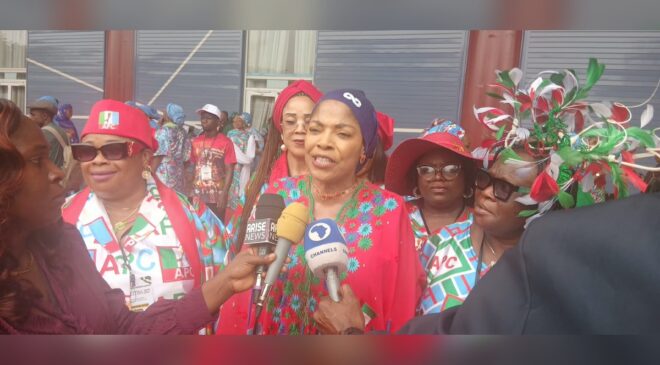
ABUJA/Nigeria: Hon. Princess Gloria Akobundu has called on Nigerian women to strengthen their participation in political leadership, policy discussions and grassroots decision-making, arguing that their role in national development should extend beyond election campaigns.
Akobundu, the National Organising Secretary of the APC Women Campaign Organisation/Directorate of Women Mobilisation and Empowerment, made the call after the organisation’s Pre-Inaugural Summit and Women’s Empowerment Programme held on October 5, 2026, at the Tinubu International Conference Centre in Abuja.
She commended President Bola Ahmed Tinubu for providing opportunities for women to participate in the political process and contribute to his administration, while urging them to translate those opportunities into meaningful representation and measurable achievements.
According to her, women have made significant contributions to grassroots mobilisation, community development, entrepreneurship, public administration and political advocacy. She maintained, however, that greater recognition and institutional support were needed to enable them to participate more fully in leadership and decision-making.
Akobundu argued that women should be regarded as strategic partners in governance rather than being mobilised only during election periods. She encouraged them to become more involved in party structures, voter education, policy discussions and community engagement.
She also appealed to women across the country to support the political activities of the All Progressives Congress (APC) ahead of the 2027 general elections, urging them to promote peaceful mobilisation, responsible voter engagement and issue-based political participation.
The APC chieftain expressed appreciation to the First Lady, Senator Oluremi Tinubu, for her advocacy on women’s empowerment and initiatives aimed at improving their social and economic well-being.
She stressed that effective empowerment should go beyond political representation to include education, entrepreneurship, financial inclusion, healthcare, leadership development and access to sustainable economic opportunities.
According to Akobundu, women who have access to relevant skills, resources and economic opportunities are better positioned to support their families, strengthen their communities and contribute to national development.
She called for greater collaboration among government institutions, political organisations, civil society groups and private-sector stakeholders to ensure that empowerment programmes deliver tangible and lasting benefits.
Akobundu also made a special appeal to women in the South-East, particularly Ndigbo, to participate actively in the democratic process and engage constructively with national political institutions.
She said women across Nigeria share common aspirations, including improved security, better healthcare, educational opportunities and economic prosperity, irrespective of their ethnic, religious or geographical backgrounds.
She urged market women, traders, farmers, professionals, entrepreneurs, artisans, young people and grassroots mobilisers to work together to strengthen civic participation and ensure that their concerns receive attention in public policy discussions.
Reflecting on the Abuja summit, Akobundu described the gathering as an opportunity to improve coordination among women leaders and prepare them for more effective political mobilisation.
She said the transition from Tinubu Torch Bearers (TTB) to the APC Women Campaign Organisation/Directorate of Women Mobilisation and Empowerment represented a renewed focus on organising women and expanding their participation in politics.
According to her, the organisation’s effectiveness would depend on building functional structures across states and local government areas, improving communication and maintaining sustained engagement with women at the grassroots.
Akobundu, who served on the Planning Committee and headed the Media Committee, also highlighted the importance of strategic communication in connecting national leadership with grassroots members and ensuring that information about the organisation’s activities reaches its intended audience.
She urged members to embrace teamwork, discipline, transparency and accountability, stressing that the organisation must move beyond ceremonial gatherings to programmes with clear objectives and measurable outcomes.
Reaffirming her commitment to the initiative, Akobundu said she would continue working with women leaders, party stakeholders and grassroots mobilisers to promote women’s participation in governance and national development.
She expressed confidence that sustained collaboration among political leaders, women’s organisations and community stakeholders could expand opportunities for women and strengthen their contribution to Nigeria’s future.