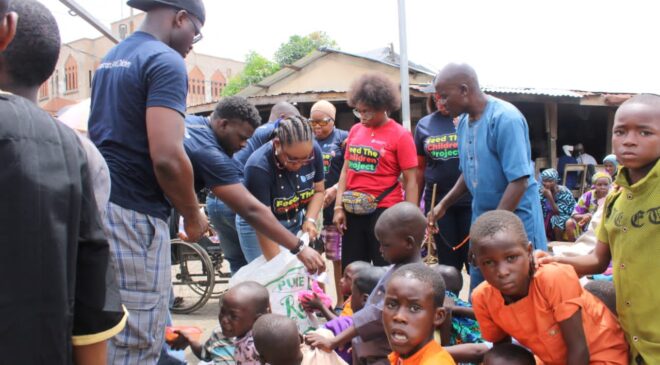
LAGOS/Nigeria: More than 3,000 vulnerable children and persons with disabilities (PWDs) living in slums, underserved communities and on the streets of Lagos and parts of Ogun State received free meals and drinking water during a special Children’s Day outreach organised by the Street Child Care and Welfare Initiative (SCCWI).
The intervention, carried out with the support of donors, partners and volunteers, formed part of SCCWI’s annual Feed The Children Project, a humanitarian initiative aimed at combating hunger, malnutrition and social neglect among vulnerable children.
Speaking on the impact of the programme, the Project Director of SCCWI, Ms. Comfort Onyanta Alli, said the outreach was designed not only to provide food but also to restore hope and demonstrate care for children who are often overlooked by society.
She disclosed that the initiative, which was launched in 2020, has continued to expand its reach over the years, providing nourishment, social support and a sense of belonging to thousands of vulnerable children.
According to Alli, the 2026 edition mobilised more than 30 volunteers drawn from Lagos, Ogun, Oyo and Osun states, who dedicated their time and resources to reach vulnerable communities across several locations.
The beneficiaries were drawn from Oko Agbon, Ikorodu, the Internally Displaced Persons (IDP) Camp at Igbo Efon in Lekki, Oshodi, Mushin, Ologo Otto Slum, Oko Baba, Yaba and selected communities in Ogun State.
“Over the years, the project has continued to provide nourishment, hope and social support to children who are often overlooked.
“This year’s intervention mobilised over 30 volunteers from Lagos, Ogun, Oyo and Osun States, who dedicated between five hours and three days of volunteer service to reach vulnerable populations across several communities,” she said.
Alli reaffirmed the organisation’s commitment to improving the welfare of vulnerable children and ensuring that no child is denied access to basic necessities because of economic hardship or social circumstances.
“We believe no child should go hungry. Through the Feed The Children Project, we are not only providing meals but also restoring hope and reminding vulnerable children that they are valued and cared for,” she stated.
The impact of the outreach was reflected in the reactions of beneficiaries and community members, many of whom expressed appreciation for the intervention.
One of the child beneficiaries simply said: “Thank you for the food. I am happy today.”
A community leader who witnessed the outreach commended SCCWI and its partners for bringing relief to families struggling with the rising cost of living.
“Programmes like this bring relief to families and children who struggle daily to meet their basic needs,” the community leader noted.
A volunteer who participated in the exercise described the experience as both rewarding and emotional.
“The smiles on the children’s faces made every minute of our service worthwhile. It was a humbling experience,” the volunteer said.
While celebrating the success of the 2026 edition, SCCWI acknowledged that the challenges facing vulnerable children across Nigeria remain enormous and require sustained interventions.
The organisation reiterated its commitment to partnering with individuals, corporate organisations, development partners and government agencies to improve the welfare, protection and future prospects of disadvantaged children.
Alli also expressed gratitude to the donors, volunteers, partners and supporters whose contributions made the Children’s Day outreach possible.
She said the continued support of stakeholders remains critical to expanding the reach of the initiative and ensuring that more vulnerable children receive the care, protection and opportunities they deserve.
As Nigeria marked Children’s Day 2026, the outreach served as a reminder of the urgent need to strengthen social support systems and ensure that every child, regardless of background or circumstance, has access to food, care and hope for a better future.