By Emmanuel Enebeli
WARRI/Nigeria: The Association of Ndokwa Professionals in Academia (ANPA) has raised the alarm over what it described as the deepening political alienation and socio-economic neglect of Ndokwa nation, warning that the region’s underdevelopment is largely self-inflicted and sustained by internal political failures.
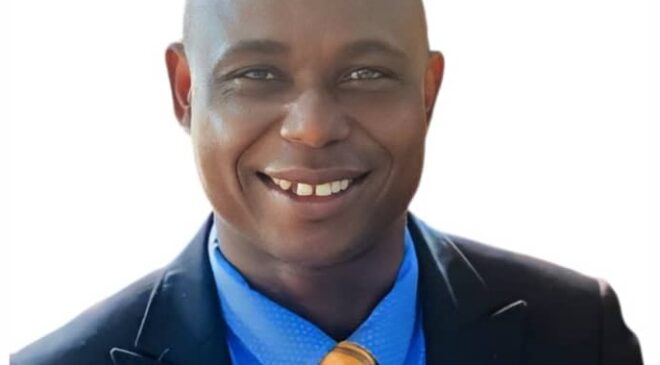
Delivering a virtual lecture titled “Oppressive Politics, Socio-Economic Alienation and the Underdevelopment of Ndokwa Nation: Factors, Effects and the Way Forward” on Sunday, January 25, 2026, Dr. Festus Omosor said the marginal position of Ndokwa in Delta State politics was not only the result of state neglect but a direct consequence of weak political identity, elite complicity and poor civic engagement within the nation.
Dr. Omosor argued that oppressive politics in Ndokwa operates through two interconnected dimensions: internal oppression driven by local political elites and external alienation imposed by the state. Of the two, he said internal oppression was more damaging because it created the conditions that allowed the state to ignore the people with little resistance.
According to him, political elites who ought to defend community interests have instead aligned themselves with dominant power blocs in order to secure personal relevance and patronage. “Rather than mobilising state resources for infrastructure, employment and social services, many of our leaders have embraced rent-seeking, political opportunism and elite rivalry,” he said, noting that factional struggles among Ndokwa politicians had weakened the collective bargaining power of the people at the state level.
He lamented the systematic exclusion of grassroots voices from decision-making, saying communities were rarely consulted on development projects, resource allocation or political strategies. The result, he noted, was widespread apathy, declining civic participation and a growing perception of politics as an exploitative enterprise serving only a privileged few.
Highlighting the visible consequences of oppressive politics, Dr. Omosor pointed to the poor state of infrastructure across Ndokwa land, including bad roads, unreliable electricity supply, inadequate healthcare facilities and the absence of tertiary institutions. He described it as a painful paradox that a region contributing significantly to national energy generation still lacked steady power and basic amenities.
“The most disturbing reality is that there is no college of education, no polytechnic and no university campus in Ndokwa land,” he said, adding that even the few federal institutions attracted to the area were struggling due to weak political support and poor infrastructure.
The lecturer also condemned the activities of multinational oil companies operating in the region, accusing them of exploiting natural resources without commensurate development. He said memoranda of understanding were often violated, contracts poorly executed and environmental degradation left unaddressed, while local leaders failed to hold the companies accountable.
Dr. Omosor further blamed weak and politicised traditional institutions, ineffective advocacy groups, the politicisation of the Ndokwa ethnic union and the silence of intellectuals for sustaining the culture of oppression. He observed that many traditional rulers now depended on state patronage for legitimacy, thereby losing the courage to challenge government or demand development for their communities.
On the role of citizens, he said years of neglect had bred resignation and low expectations, allowing patronage politics to thrive. According to him, festive distributions of branded food items and selective empowerment schemes had replaced genuine development and accountability.
In his conclusion, Dr. Omosor declared that Ndokwa’s underdevelopment was largely self-inflicted, insisting that “the quality of politics and governance in any society reflects the collective character, values and engagement of its people.” He maintained that external marginalisation by the state was a consequence of the internal political culture of the Ndokwa nation.
He called for a fundamental reorientation, urging the Ndokwa ethnic union to depoliticise and reposition itself as a strong advocacy platform, while challenging intellectuals to reclaim their role in public discourse and policy engagement. He also urged traditional rulers to regain independence and citizens to become politically conscious and united.
Quoting liberation theologian Gustavo Gutiérrez, Dr. Omosor reminded participants that “the oppressed must take their destiny into their own hands, for no oppressor regrets at will,” warning that without urgent reforms, Ndokwa would remain trapped in a cycle of alienation and underdevelopment.
The ANPA lecture series, which attracted academics, professionals and community leaders from within and outside the state, is part of ongoing efforts by the association to stimulate critical debate and chart a new developmental pathway for the Ndokwa nation.